
Designing a CI/CD pipeline developers will not route around
A pipeline succeeds when it is fast enough to trust and strict enough to matter. Getting that balance wrong is why teams disable checks.
ZooBieDoo Infotech Engineering TeamRead
GitOps gives auditable, reversible deployments by declaring desired state in version control and letting an agent reconcile it.
Desired state lives in a repository. An agent running in the target environment continuously compares actual state against it and reconciles any difference.
This makes deployment a merge rather than a command, which means every change is reviewed, attributed and revertible through the same mechanism as code.
That last point is a genuine security improvement that is easy to overlook.
Secrets need a solution, because plain values cannot sit in the repository — sealed secrets or an external store with references. Promotion between environments needs a deliberate structure rather than copying files around.
And automatic drift correction, while usually desirable, can fight an engineer making an emergency change. Decide in advance how that is handled.
GitOps fits declarative targets well, Kubernetes especially. It fits less naturally where deployment is imperative or where the platform has no reconciliation agent.
For teams already comfortable with pull requests and code review, the model tends to feel natural quickly, because it reuses habits they already have.
The most common early difficulty is how to promote a change from one environment to the next without copying files by hand or maintaining three divergent copies of everything.
A workable structure keeps a shared base configuration with per-environment overlays holding only genuine differences. Promotion becomes updating an image reference in the next environment's overlay, which is reviewable and revertible.
Avoid branching per environment. It looks tidy and produces merge conflicts and drift, because environments then differ by whatever failed to merge rather than by intent.
It is most mature there because Kubernetes is declarative and has reconciliation built in. The principles apply elsewhere, but tooling is thinner.
Separating application code from deployment manifests is common and keeps concerns clear. A single repository is simpler for small teams. Both work; consistency matters more than the choice.
Define the path in advance: either make the change and immediately reconcile it back into the repository, or temporarily suspend reconciliation for that component. Undocumented emergency changes are what GitOps is designed to eliminate.
Keep reading
A pipeline succeeds when it is fast enough to trust and strict enough to matter. Getting that balance wrong is why teams disable checks.
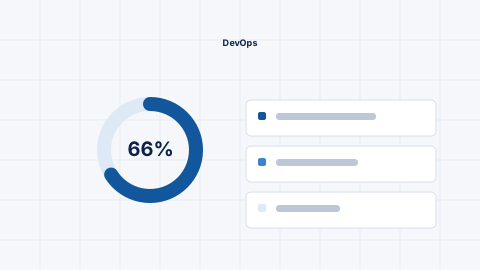
Four measures describe delivery performance well. They are useful for finding constraints and harmful when used to compare teams.
Credentials in repositories remain one of the most common causes of breach, and it is one of the most preventable.