Operations dashboards and control systems
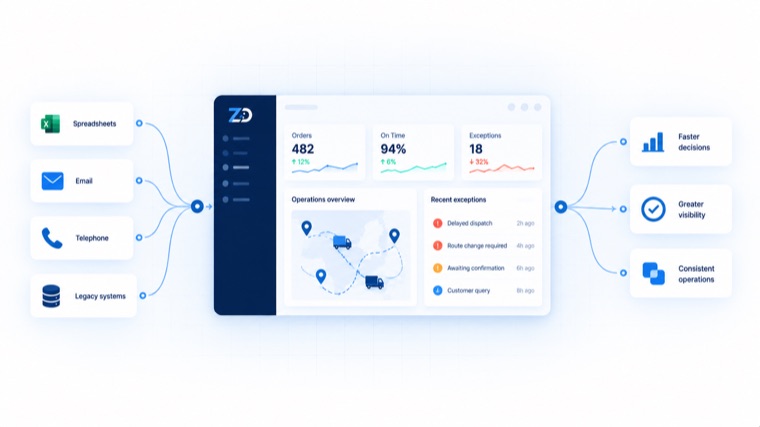
A single live picture of an operation for teams currently working from spreadsheets, email and telephone — built around the exceptions rather than the happy path.
Solution
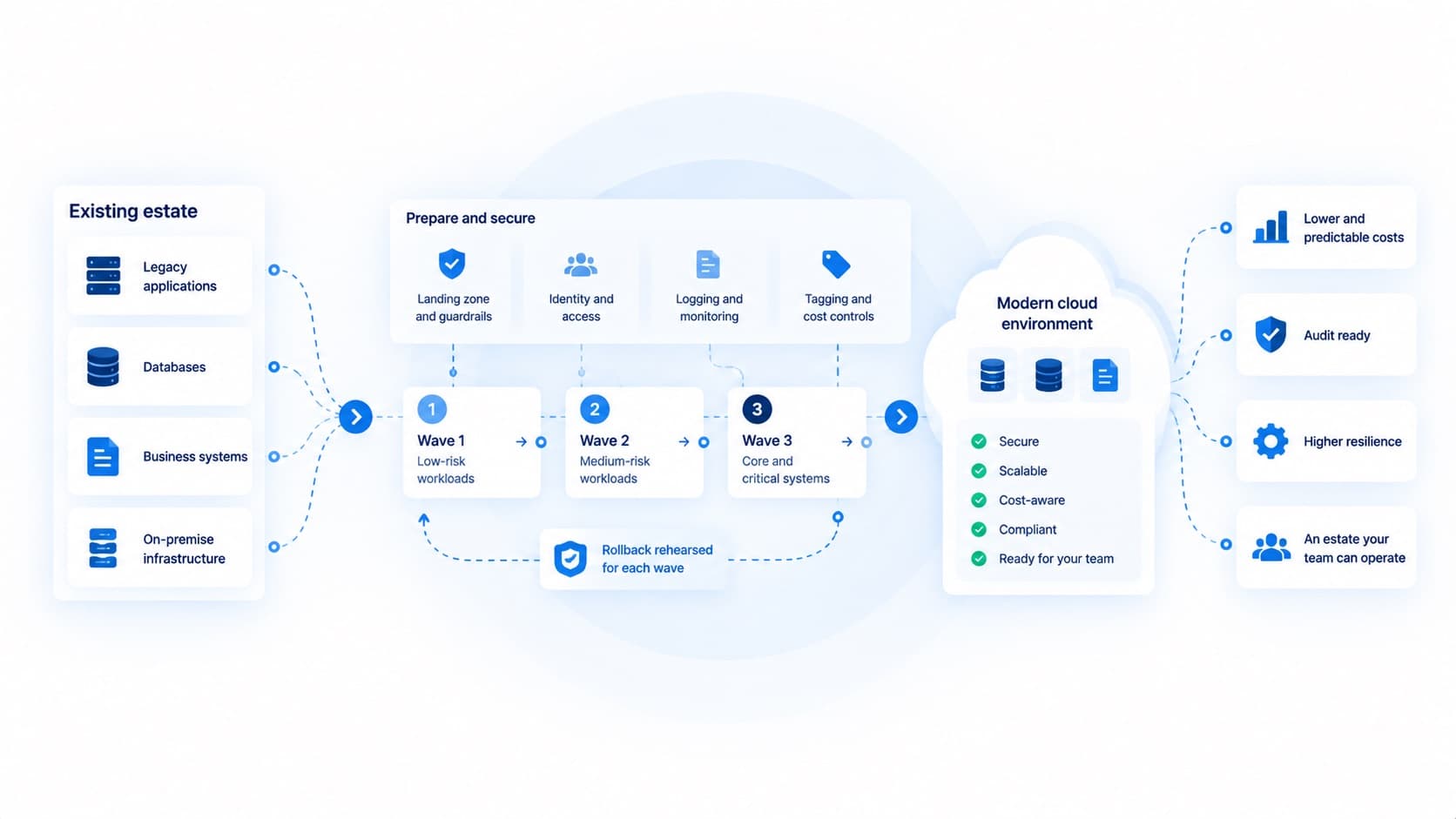
Moving an existing estate to cloud in rehearsed waves, with the landing zone, guardrails and cost attribution established before anything moves.

Migrations overrun for a small number of recurring reasons: the target date is set before the assessment is done, workloads are moved as they stand rather than rightsized, and nobody owns the bill until it arrives.
The result is a cloud estate that costs more than the data centre it replaced while being no easier to operate — the outcome the business case explicitly promised to avoid.
In regulated environments there is a further constraint: evidence. Auditors ask what changed, who approved it and where the logs are, and a migration that cannot answer creates a compliance problem alongside the technical one.
Nothing moves during the first phase. Account structure, network segmentation, identity, logging, tagging policy and cost attribution are established first. This feels like delay and is the reason the rest of the programme is uneventful.
Every workload is then assessed individually against a scorecard covering data sensitivity, dependency depth, licensing, change tolerance and business criticality, producing a decision to rehost, replatform, refactor or retire. Retiring workloads with no identifiable consumer is a common and welcome finding.
Migration runs in waves. The first deliberately carries low-criticality workloads so the runbook is proven under real conditions, and every wave has a rehearsed rollback and a defined success gate.
Capabilities
Every workload scored individually, with the migration path and its reasoning recorded.
Account structure, network design, identity and policy enforced as code before the first move.
Sequenced by dependency and risk, with rollback rehearsed for each wave.
Enforced tagging and per-team reporting, so spend is owned rather than discovered.
Recovery objectives demonstrated through periodic failover testing, not asserted in a document.
Runbooks, monitoring and pipelines your own engineers can run without us.
Outcomes
What this changes for the organisation once it is running. These are the outcomes the design targets, agreed with you as measures before build starts.
Technology
Indicative rather than fixed. The specific choices follow your existing estate, your team's skills and the constraints we find during discovery, and are recorded as architecture decisions before build.
| Area | Typical choices |
|---|---|
| Platforms | AWS, Microsoft Azure, Google Cloud or Oracle Cloud Infrastructure |
| Infrastructure as code | Terraform, with policy guardrails enforced automatically |
| Compute | Managed containers or Kubernetes, chosen on scale and team maturity |
| Operations | Grafana, Prometheus, OpenTelemetry or the platform-native stack |
A note on these pages. They describe the problem spaces we build for, how we approach them and the architecture we use. They are not client case studies and make no claim about specific engagements or results. Where a client agrees to be named, a full case study will be published in the same place.
More solutions

A single live picture of an operation for teams currently working from spreadsheets, email and telephone — built around the exceptions rather than the happy path.

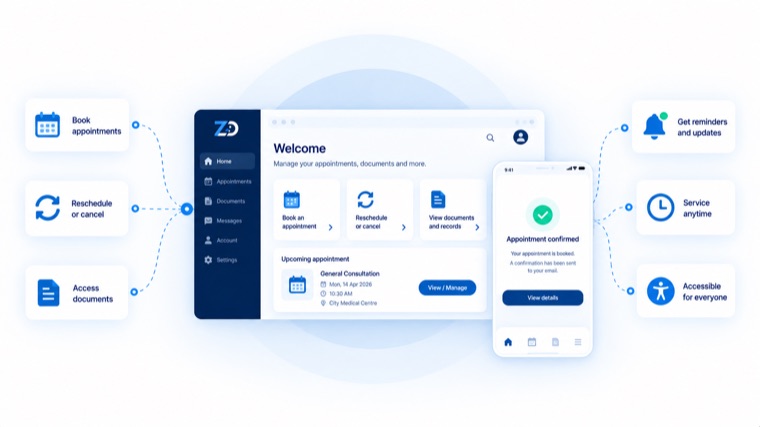
Self-service that genuinely reduces inbound contact, designed around the moments that decide whether someone completes the task or picks up the phone.

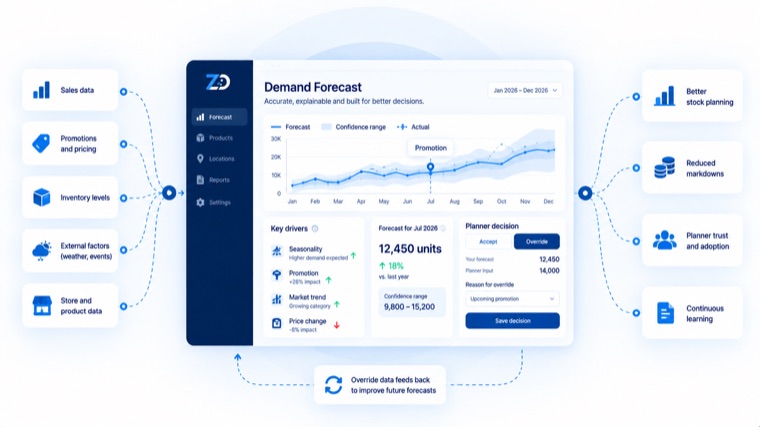
Forecasts that planners actually use, because the system explains itself, shows its uncertainty and records the reasons for overrides.
Start a conversation
An hour with our team, no charge and no obligation. You will leave with a point of view on the problem whether or not you work with us.
Monday to Saturday, 10:00 – 19:00 IST