Solution

Operations dashboards and control systems

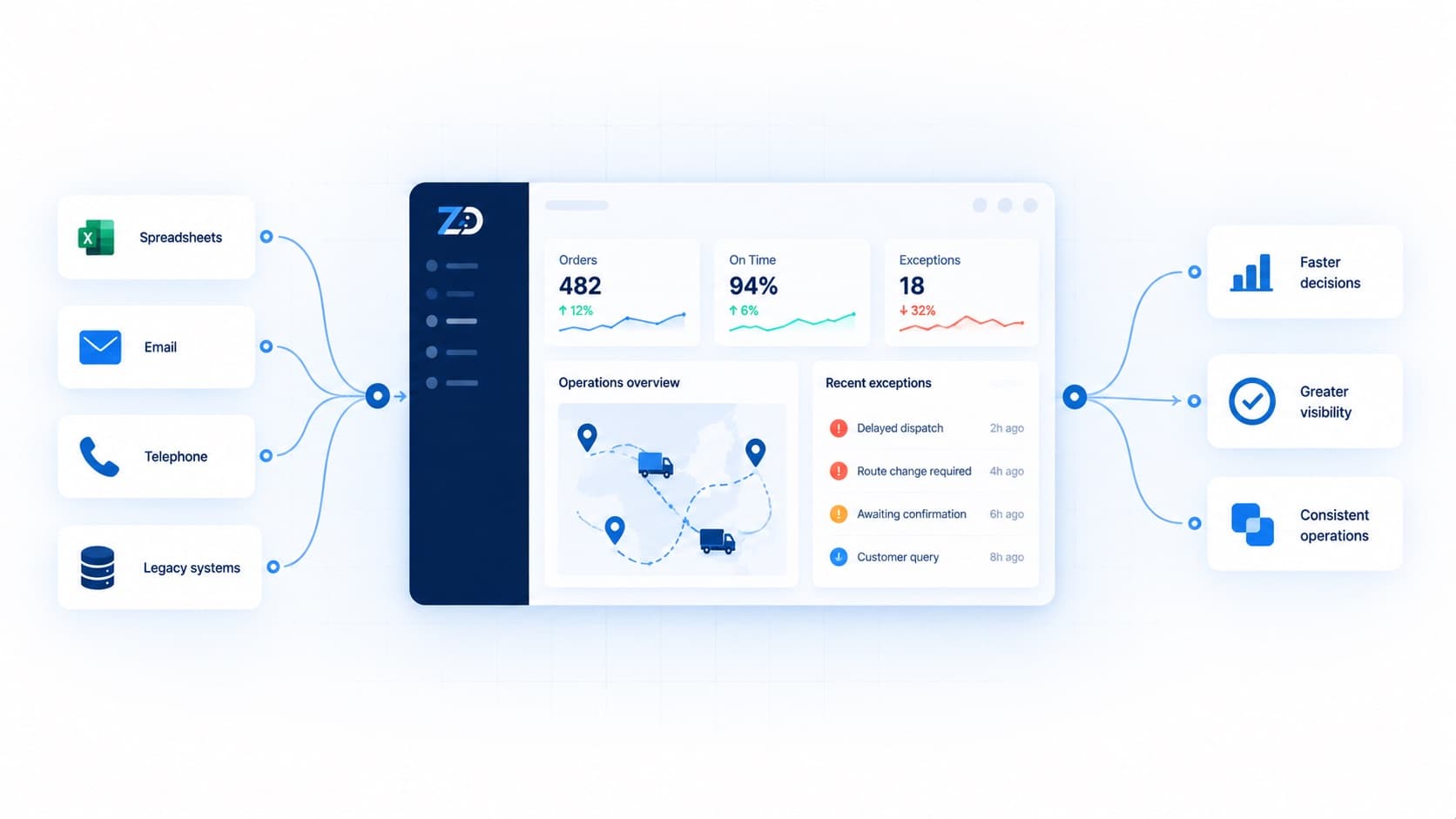
A single live picture of an operation for teams currently working from spreadsheets, email and telephone — built around the exceptions rather than the happy path.

LogisticsManufacturingServices
6
Core capabilities
3
Practices involved
Architecture
Explained openly
Operations dashboards and control systems

The business challenge

Operational teams that have grown by acquisition or accretion end up with several ways of doing the same thing: a legacy system covering part of the process, shared spreadsheets covering the rest, and a great deal of telephone holding it together.

The visible symptom is that nobody can answer a simple question — where is this order, who is working on it, when will it be done — without calling someone. The commercial symptoms are slower dispatch, disputed invoices and customers asking for visibility the business cannot provide.

Previous attempts often fail because they modelled the process as described in a meeting room rather than the process as performed, and the exceptions are where operational work actually happens.

Our solution

We begin with the people doing the work rather than only those commissioning the system, mapping the exceptions alongside the standard path. That commonly reveals that a share of the requested scope describes workarounds for the old system rather than genuine needs — removing it is the cheapest improvement available.

The platform is then delivered in vertical slices: one site and one work type into production first, then progressively wider, with supervisors from the operational teams acting as release owners rather than recipients.

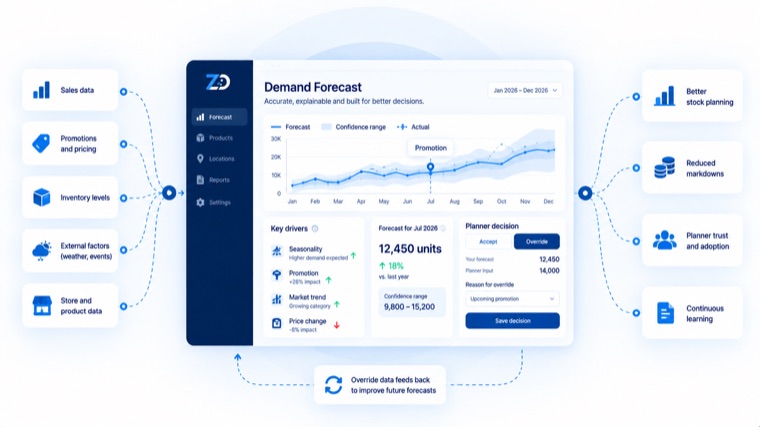
Where scheduling or routing optimisation is involved we generally build it as advisory rather than automatic. The system proposes and the planner disposes, and trust in the recommendation grows considerably faster when the operator can override it.

Capabilities

Key features and capabilities

Live operational view

Current status across sites, teams and work items, updated as events occur rather than on a refresh cycle.

Exception-first workflow

Work that needs attention surfaces automatically, rather than requiring someone to notice its absence.

Role-aware access

What each person sees and can change follows their role, with an audit trail on consequential actions.

Advisory planning

Optimisation proposes; the planner decides, with the reasoning visible and overrides recorded.

Integration with systems of record

Bidirectional flow with ERP, finance and customer systems so the dashboard is not another silo.

Customer-facing visibility

Tracking and status for customers served from the same API layer as the internal console.

  • Fewer status enquiries reaching operational staff, because the answer is visible.
  • Faster dispatch and allocation decisions, with the reasoning recorded.
  • Disputes resolved from evidence held in one system rather than reconstructed from email.
  • Consistent process across sites without removing local judgement.
  • A single reporting basis, so operational and financial numbers agree.

Outcomes

Benefits

What this changes for the organisation once it is running. These are the outcomes the design targets, agreed with you as measures before build starts.

Technology

Relevant technologies

Indicative rather than fixed. The specific choices follow your existing estate, your team's skills and the constraints we find during discovery, and are recorded as architecture decisions before build.

AreaTypical choices
BackendNode.js, Python or Java services over PostgreSQL
EventsMessage queue or event stream for status propagation
Front endReact operations console designed for a working environment
InfrastructureAWS, Azure or Oracle Cloud, containerised, defined in Terraform

Start a conversation

Tell us what is not working. We will tell you what we would do about it.

An hour with our team, no charge and no obligation. You will leave with a point of view on the problem whether or not you work with us.

Monday to Saturday, 10:00 – 19:00 IST