
Usability testing when you have no research budget
Five participants and an afternoon will tell you more about your product than a quarter of internal debate.
ZooBieDoo Infotech Engineering TeamRead
Design systems are abandoned for organisational reasons more often than design ones. A short assessment up front predicts which ones will survive.
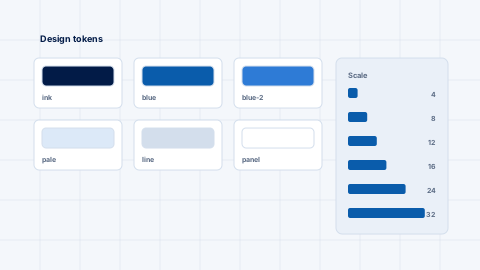
A design system is a product with users, and like any product it fails when it is harder to use than the alternative. The alternative is always available: a designer can draw a new button in ninety seconds and an engineer can write one in five minutes.
So the question that predicts survival is not “is the system well designed”. It is “is the system the path of least resistance”.
Before proposing anything, count what exists. A mid-size product estate will typically have many distinct button treatments, several input styles and more than one type scale in active production use.
The count is not for shaming anyone. It establishes the scale of the consolidation and reveals why the variants exist. A surprising proportion turn out to be legitimate — a genuine need the system did not serve — and those become requirements rather than violations.
Tag every variant as duplicate, legitimate variant or legacy. The ratio tells you whether you are looking at a governance problem or a coverage problem, and those need different remedies.
The questions that predict survival are largely organisational:
That last question is answered badly most often. The honest answer is an escape hatch: a documented way to build outside the system, clearly marked, with a route back in. Systems without one do not prevent divergence, they just make it invisible.
The highest-leverage artefact is the token layer — colour, spacing, type, radius, elevation and motion, defined once and referenced everywhere. Name tokens by role rather than by value, or the first theme change will require renaming everything. Keep the primitive set small: a scale of ten spacing values people actually use beats a scale of thirty they round off.
Finally, measure the right thing. Teams building design systems report component count, which measures supply rather than demand. Measure instead the proportion of production screens built from system components, the number of one-off components created per sprint, and the time from a team needing something to having it.
A system with thirty components at high adoption is healthy. A system with two hundred at low adoption is a museum.
Keep reading
Five participants and an afternoon will tell you more about your product than a quarter of internal debate.
Software people use all day has different requirements from software people use occasionally. Optimising for the wrong one makes experts slower.
Tokens turn visual decisions into named values shared by design and code. Naming them well is the whole trick.